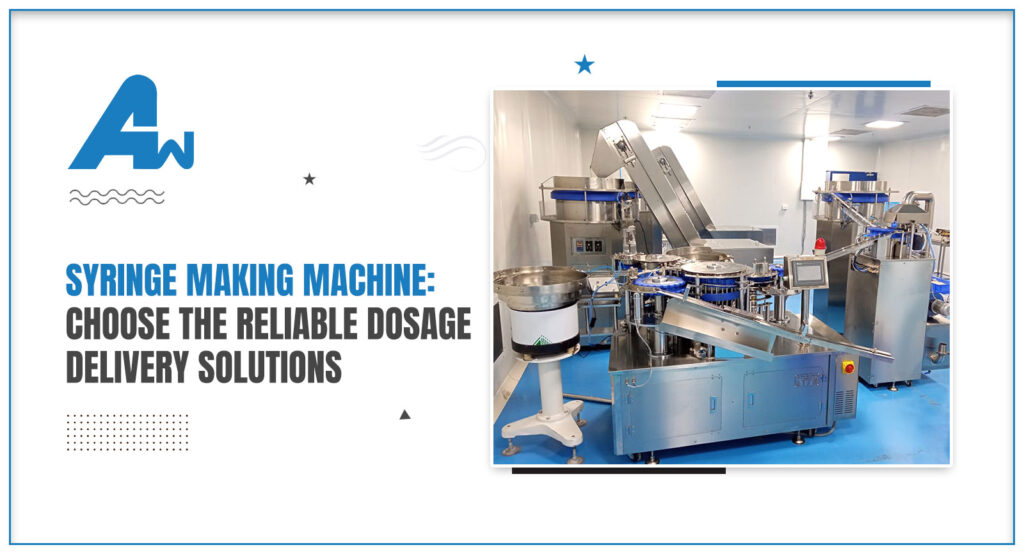
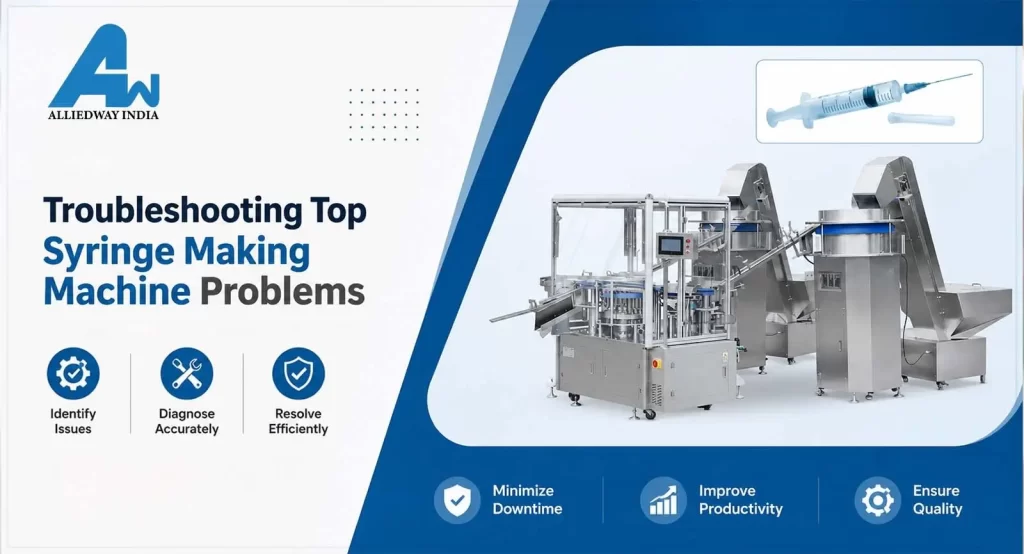
Ask anyone who’s spent time on a production floor what the most annoying thing is, and downtime will be the answer every single time. One stalled machine can spoil the entire day, and on a syringe making machine, that delay gets expensive quickly. Most manufacturers only get in touch with syringe making machine manufacturers once something’s already gone wrong, a needle not seating properly, or output dropping overnight without any reason. The thing is, a lot of these problems are predictable once you know what to check. Here’s a rundown of the issues that come up most often on the floor, why they happen, and what usually fixes them without losing a full day’s production.
The Reason These Machines Keep Acting Up
A syringe production line isn’t one machine doing everything. It’s several processes, barrel moulding, needle assembly, sterilisation, and packing, all needing to stay in sync with each other. Slip up at one stage, even slightly, and everything downstream feels it.
That’s the root of most syringe making machine problems. Rarely is it one breakdown. More often, small misalignments quietly build up until output drops or an entire batch fails inspection.
When Needles Won’t Seat Right During Assembly
This complaint comes up more than any other. The needle doesn’t fit properly into the barrel hub, and rejected units start piling up fast.
Either the needle wasn’t cut to the exact length it needed to be, or the assembly machine’s gripper had slowly drifted out of calibration without anyone catching it sooner. Checking the wire-cutting calibration is the first place to look. Recalibrating the gripper alignment usually clears this up within minutes; there’s no need to shut the entire line down over it.
Barrel Moulding That Comes Out Inconsistent
Polypropylene barrels sometimes leave the mould with slight thickness differences. Doesn’t sound like much, but it causes leaks or plunger friction once the syringe gets assembled.
This rarely points to an actual mould defect. It’s usually the inconsistent cooling time during the injection moulding stage doing the damage. Before assuming the mould needs replacing, check the temperature settings on the moulding machine. Just tuning the cooling time often sorts the inconsistency, no costly part swaps needed.
Why Production Speed Sometimes Drops for No Clear Reason
This one’s really frustrating because visually, nothing seems broken. But the output just keeps slowing down, no matter what. It’s rarely the whole machine misbehaving. Usually, just one stage is quietly holding up everything that follows it.
Tracking cycle time at each stage individually, rather than judging the entire line at once, almost always reveals the culprit. Grinding and polishing stages turn out to be the bottleneck more often than people expect, mainly because they’re easy to overlook during routine checks.
What’s Behind Failed Sterilisation Checks
A failed sterility check after the ethylene oxide process means the entire batch becomes unusable. That’s costly on its own, but it’s even more frustrating when hospital orders are sitting on a deadline.
This usually comes down to wrong exposure time or incorrect humidity levels inside the sterilisation chamber, something that becomes more likely whenever batch sizes change but chamber settings don’t get updated to match. The fix here is simple in theory: double-check chamber settings against the actual batch size before running it, since bigger batches need longer exposure, and this detail gets missed surprisingly often.
Blister Packs That Refuse to Seal
When the packaging doesn’t seal properly, the syringe inside loses its sterility, meaning the whole unit ends up scrapped. Most of the time, this traces back to heat settings on the packing machine being slightly off, even by a small margin.
Running a small test batch and adjusting the heat in small increments works far better than guessing a number outright. It costs a bit of extra time upfront, but saves a much bigger batch from going to waste.
How the Needle Making Process Ties Into All of This
A surprising number of syringe making machine problems actually start earlier in the chain, at the needle-making stage. This is a separate but closely connected process that shapes stainless steel wire into a sharp, precise tip across a few distinct steps.
- Wire feeding and cutting to exact length
- Pointing and grinding the tip to the correct angle
- Polishing away rough edges or burrs
- Sensor-based quality inspection before the needle heads are assembled
When something’s slightly off at any of these points, it usually doesn’t surface until the needle reaches the syringe assembly line. So, plenty of what looks like a syringe making machine issue is really a needle problem, wearing a different mask.
Why It’s Worth Being Picky About Your Manufacturer
A good portion of these problems trace back to how the machine was built in the first place, not operator error. This is exactly where experience among syringe making machine manufacturers ends up making a real difference.
Manufacturers with years behind them tend to build tighter calibration tolerances and more dependable sensors into the machine from day one. That translates into fewer surprises once it’s actually running on your floor. It’s worth asking any manufacturer directly how their machines handle calibration drift over months of continuous use, since that’s typically where cheaper equipment starts falling apart.
Conclusion
Most problems aren’t random. They trace back to one specific stage, something usually fixable in minutes once you know exactly where to look, instead of shutting the whole line down and guessing your way through it. AlliedWay India has spent over two decades building syringe making machines and helping manufacturers work through exactly these kinds of production challenges. Whether you’re setting up a new line or troubleshooting one that’s already giving you grief, having the right equipment and the right guidance from day one makes the entire process a lot less stressful.
FAQ’s
1. Why does my syringe-making machine produce inconsistent output?
Usually, one specific stage, often grinding or polishing, is slowing down the rest of the line. Checking cycle time at each stage on its own helps you find it quickly.
2. How do I fix needle misalignment during syringe assembly?
Start with the wire-cutting calibration and the assembly gripper alignment. Most misalignment issues get fixed just by recalibrating these two points.
3. What's the most common cause of sterilisation failures in syringe production?
Wrong exposure time or humidity levels during the ethylene oxide process, especially when batch sizes change, but the chamber settings don’t get adjusted to match.