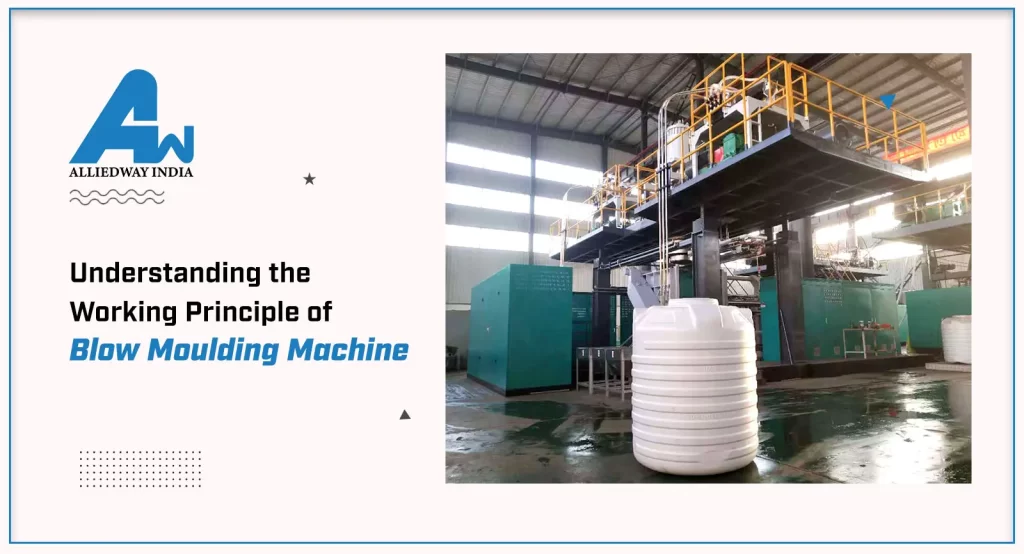
Blow moulding is a plastic manufacturing method. This process is used in different sectors that make chemical storage containers, household containers, etc. Many industries use this process to manufacture plastic objects, such as drums, bottles, and more. The HDPE blow molding process is especially popular because it delivers strong, lightweight, and durable plastic parts. HDPE (High-Density Polyethylene) is a durable plastic that resists moisture and chemicals. The process is completed with an HDPE blow molding machine that can produce plastic containers faster.
Blow molding is mostly dependent on heating a plastic tube known as a “parison.” When this “parison” reaches the melting point, place it in the cavity of the mold. Then it transferred to a hollow object. When the plastic section has cooled and hardened, you may open the mold and release the result.
What are the basic types of blow moulding processes?
There are three primary types of blow molding processes mentioned below:
HDPE Blow Molding
It is the method of shaping a softened thermoplastic hollow shape known as a parison. This parison is first vertically extruded from an HDPE blow molding machine’s die head and then inflated against the cooling surface of a closed mold. The expanded plastic solidifies into a hollow HDPE product that requires no or very few finishing steps following the blow molding.
Blow molding manufactures a wide range of HDPE plastic items, the most typical of which are plastic bottles for cleaning agents and lubrication oils, jerry cans for culinary oils, water tanks, and drums for chemical liquids.
Extrusion Blow Molding
The extrusion blow molding method has several advantages. It costs less than other varieties. This procedure also saves time since polymers are produced faster. In this process, the parison is fed back into the mold once it has been expelled. When this process is complete, the blade slices off each shape individually.
The downsides of extrusion blow molding include a lack of control over wall thickness and a large amount of discarded material.
Injection Blow Molding
Let’s go deeper to learn how it works. It all depends on the blow. The initial step is to inject the parison into the mold cavity surrounding the rod. In this stage, the parison resembles a test tube. You may now extrude the completed product from the machine.
Injection stretch blow molding
This method combines injection molding with blow molding. First, form the plastic into a solid shape. The primary goal of this stage is to create a threatened bottleneck. When the preform has cooled, you may insert it into the stretch blow molding.
What is superior, HDPE blow molding or injection molding?
The response is just what you expected. It depends on the sort of application. The blow molding process should be your first choice when working with items that require hollow pieces, such as water tanks and bottles.
If you make complicated items that require solid parts, injection molding is the ideal solution. You must note that blow molding results in thin walls. As a result, you will use fewer raw materials than are required for injection molding. Injection molding tools cost more than blow molding tools.
The specialty of an HDPE blow molding process is its cost efficiency. Once a mold is made, thousands of pieces can be produced quickly without much variation. The use of an advanced HDPE blow molding machine makes it possible to save production time and reduce waste material.
Conclusion
The HDPE blow molding process is a smart and sustainable way to produce strong and reliable plastic products. Manufacturers can achieve consistent results with minimal effort to make durable plastic containers using advanced HDPE blow molding machines. Alliedway India is a leading manufacturer and supplier of blow molding machines. We can make customized machines according to the specific requirements of our customers. Contact us to learn more about our products.