
Overview
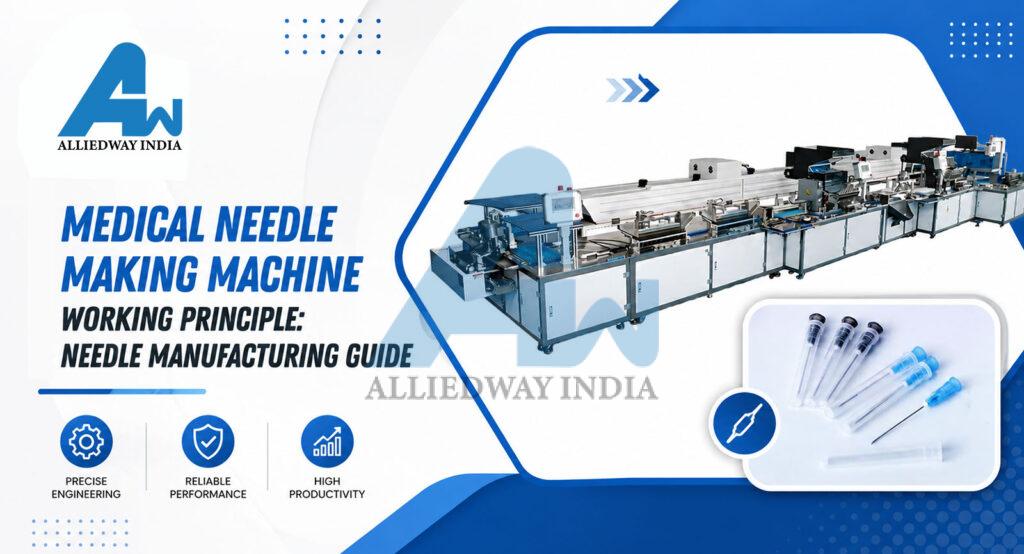
Buying a hypodermic needle making machine affects every needle you sell, so the choice needs the attention. A finished needle is more than a cut and ground steel tube. It also needs cleaning, siliconising, hub fixing, capping, inspection and packing. This guide covers seven factors across that full process, so you can compare machines and order with confidence.
Small Product, Strict Expectations
A hypodermic needle looks simple, but it must be sharp, smooth, straight and clean every single time. Buyers of syringes and needles check length, gauge, tip and bond strength closely, and rejections are expensive to the manufacturers.
Making the needle is a multi-step process. Stainless steel tube,
t to length, and its tip is ground. The needle is then cleaned and siliconised, fixed into a moulded plastic hub, fitted with a protective cap, inspected and packed for sterilisation. A hypodermic needle making machine line handles these steps through linked units. The seven factors below follow that process. Use them as a checklist when quotations arrive. Do not buy on price alone.
Hub Fixing Quality on a Hypodermic Needle Making Machine
The hub holds the needle to the syringe, so the bond must be strong and clean. Hubs are moulded plastic parts made on a separate injection moulding machine, so ask how the machine handles your hub size and tolerance.
Ask how the machine places the needle at the right depth, applies adhesive and cures it, and wih epoxy heat. Look for accurate dosing of adhesive, so there is no excess glue near the lumen.
Ask about the pull-out strength the machine can achieve and how it is tested. Request test data from running installations, and check how fast the cure cycle is. Share your hub type beforehand.
Cap Assembly, Inspection and Testing
Once the needle is bonded, a protective cap, called the needle shield, is fitted over it. Ask how the machine feeds and fits caps and whether it avoids touching the tip.
Inspection protects your name. Look for vision systems that spot bent needles, damaged tips, missing glue and misaligned hubs, and reject them automatically.
Automatic rejection cuts labour and keeps quality steady. Ask for typical rejection rates from running plants. Clear inspection records also help when your customers audit you.
Packing, Sterilisation Readiness and Hygiene Design
Medical products demand clean production. Ask if the machine uses stainless steel contact parts, smooth surfaces and enclosed zones that limit dust.
Most needles are packed and then sterilised, often with ethylene oxide, so ask how the machine hands over to packing, whether blister or paper packs, and how counts are checked.
Look at how easy it is to clean between batches. A machine built for a clean room environment, with simple covers and no hidden corners, saves hours of cleaning and reduces risk. Ask what documents the supplier gives to support GMP audits.
Output, Gauge Range and Support
Ask for the output in needles per minute and for the speed at which quality is guaranteed. Machines run at rated speed only if every unit in the line keeps pace.
Check the gauge and length range and how long it takes to change from one size to another. A hypodermic needle making machine that changes over quickly saves a lot of time when you make many sizes.
Ask how long the company has built any Needle Making Machine, which clients it serves and whether you can visit a running plant. Check that it supports standards your customers expect, such as ISO 7864 for sterile needles.
Ask about installation, training, spares and warranty. Grinding wheels, feeders, sensors and tooling wear over time, so quick supply matters. Compare quotations on total cost, including wheels, power and servicing. The cheapest offer often costs more over the years.
Points to Confirm Before Ordering
Keep this list ready when you speak to suppliers:
- Can I see sample needles with magnified tip images?
- How is hub bond strength tested?
- Which inspection and rejection checks are built in?
- Which documents support GMP and standards compliance?
- How quickly can you supply wheels and spares?
Clear answers to these tell you most of what you need to know.
Final Thoughts
Choosing a machine takes time, but quality is worth it. Check hub fixing, inspection, hygiene and support, and do not rush the decision.
If you are planning to buy, you can look at the range offered by Alliedway India. Go through the models, note down your gauge range, output needs and hub type, and contact the team to discuss what suits your plant. A short conversation now can save you a lot of trouble later when choosing your next hypodermic needle making machine.